How to Import Used Cars from China to West Africa: Full Guide to Sourcing, Payment, Shipping & Clearance (2026)
If you run an auto business in Ghana, Nigeria, Senegal, Mali, Burkina Faso or elsewhere in West Africa, importing used cars directly from China is becoming a serious option for more and more dealers. China offers deep inventory, transparent vehicle condition and competitive pricing — especially for models built for West African roads, like the Jetour T2 and the Toyota RAV4. This guide walks through the entire process: from choosing a vehicle to collecting it at your local port, and every step in between.
Who should import used cars from China
This route works best for three types of buyers: local auto dealers, wholesalers reselling in volume, and buyers sourcing for a fleet. What they share is a need for reliable supply, clear vehicle condition and controlled cost — not a single car for personal use.
If you just want one car to drive yourself, the logistics and clearance cost of importing from China may not make sense. But when you buy for a business, China's cost advantage scales with volume.
Step 1: Choosing the vehicle — age is the first gate
Before you pick any vehicle, confirm the age limit of the destination country. This is where newcomers get caught most often — the car is bought, then arrives at port over the age limit, facing penalties or even seizure.
For a 2026 import:
Ghana: 10-year maximum age for passenger cars, meaning model year 2016 or newer clears without penalty. Overage vehicles aren't automatically refused, but face a tiered penalty on CIF value — roughly 5% for 10–12 years old, around 20% for 12–15 years, rising steeply beyond that.
Nigeria: A 12-year age limit has been enforced since 2022, though some ports and agents apply a stricter 10-year cutoff — to be safe, source model year 2016 or newer. Overage vehicles risk seizure, and Nigeria uses the actual manufacture date on the VIN plate, not the model year.
Senegal: An October 2025 decree raised the passenger-car age limit from 8 to 10 years (and to 15 years for trucks and transport vehicles) — good news for importers, as more vehicles now qualify.
Left-hand drive (LHD) only. Ghana, Nigeria and Senegal all prohibit right-hand-drive vehicles from being registered for road use. There are no exceptions here.
Step 2: Confirming condition and quote
Once you've chosen a model, what you need isn't just a price — it's complete information: model year, actual mileage, condition photos, and a breakdown of the landed cost.
A professional exporter will give you a CIF quote breakdown, not just a single number. Because the duty you ultimately pay at port is calculated on CIF value (vehicle + insurance + freight), not on the sticker price you first saw.
Take Nigeria: in 2026, a passenger car under 2000cc carries a base import duty of around 35% of CIF (20% duty + 15% NAC levy), on top of which VAT and port charges apply. One important update: Nigeria's NAC levy was cut from 15% to 5% on 1 July 2026, directly lowering the landed cost — an exporter who tracks current policy can calculate this correctly for you.
Step 3: Payment — how your money stays safe
This is the biggest concern for remote buyers, and it should be. Cross-border, unfamiliar, large sums — a problem at any step means a real financial loss.
The proper process is wire transfer (T/T) paired with a Bill of Lading. The Bill of Lading is the document of title — whoever holds the original controls the cargo. In a well-run transaction, the payment sequence, document handover and shipping dates should be clear and traceable, not vague.
Before you close with any Chinese exporter, confirm they can provide complete documentation: commercial invoice, packing list, Bill of Lading, and the documents your destination country requires for clearance. Complete paperwork is itself proof of professionalism.
Step 4: Preparation and shipping
Before dispatch, the vehicle undergoes export preparation, then loads at a Chinese port. West Africa is served mainly by RoRo or container sea freight, to:
Ghana → Port of Tema
Nigeria → Lagos (Apapa / Tin Can Island)
Senegal → Port of Dakar
Sea transit from China to West African ports typically takes several weeks, depending on the route and destination port. After loading, you receive the Bill of Lading, which you use to clear and collect the vehicle at the destination port.
Step 5: Arrival and clearance
Once the cargo arrives, you or your clearing agent handle clearance, duty payment, inspection and release using the full set of documents. This step differs by country:
Nigeria requires Form M and a PAAR report, declared through the NICIS II system
Ghana runs on the ICUMS system, valuing by VIN database
Senegal values against the Argus / KBB reference price
A reliable local clearing agent matters here — complete documentation plus a professional agent are the two prerequisites for fast clearance and avoiding demurrage.
A real model example: the Jetour T2
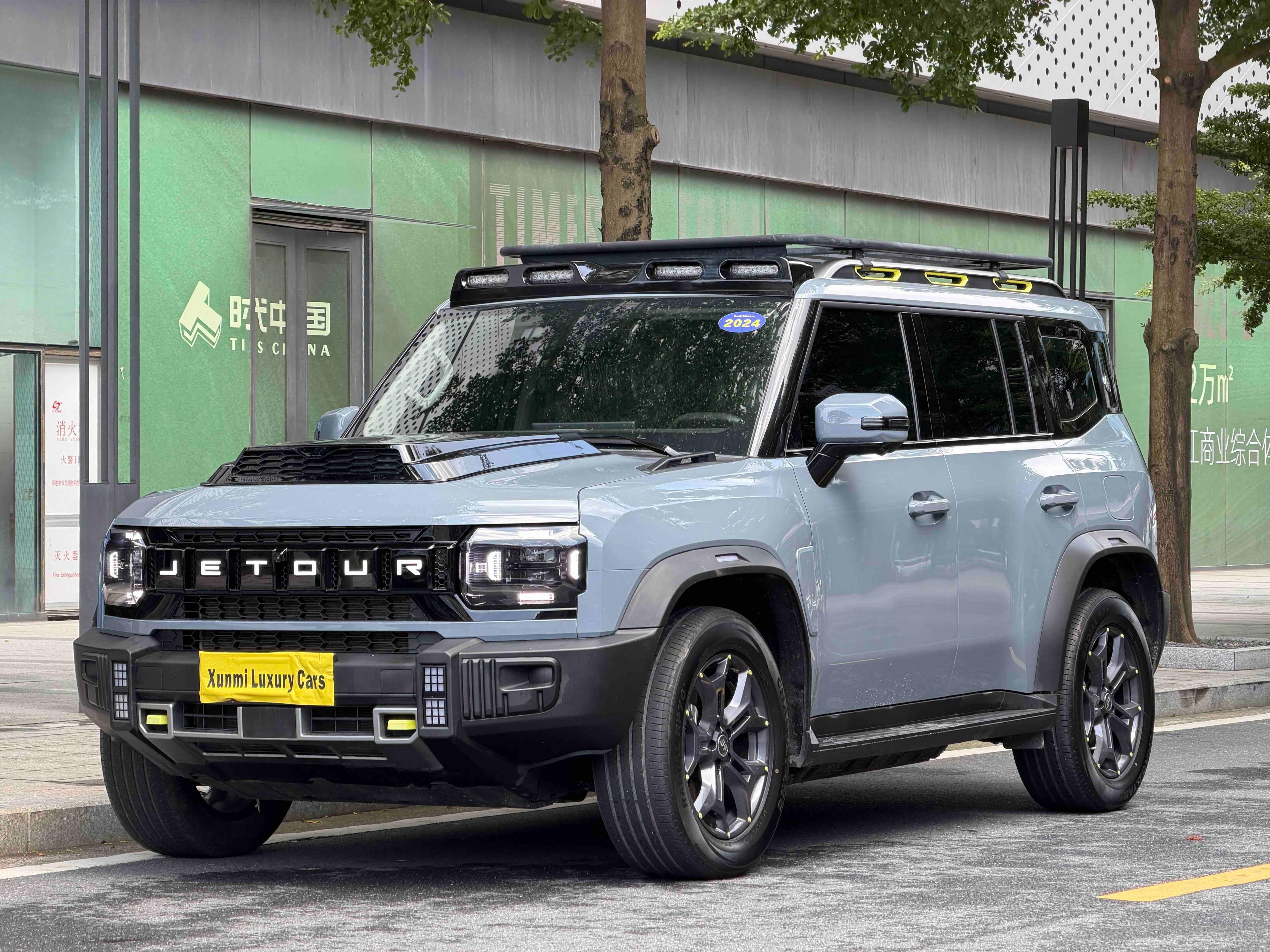
The Jetour T2 is a model that shows up repeatedly in the West African market and in organic inquiries. Its off-road capability and adaptability to difficult road conditions suit the real driving environment across much of West Africa; as a Chinese brand, it holds a price advantage over Japanese equivalents, and a growing number of West African dealers are trying it.
If you want to know the landed cost of a specific vehicle shipped to Tema, Dakar or Lagos, the fastest way is to contact us directly — tell us your target model and destination port, and we'll work out the CIF and landed duties for you.
Note: The duty and age figures above are compiled from public 2026 sources. Customs regulations in each country can change at any time; actual clearance should be confirmed with the destination country's customs authority and a licensed agent.